
Did you know 89% of professional motocross riders say suspension setup is key to their success? This shows how important it is to get your Husqvarna suspension right. Whether you’re riding sandy tracks or tough enduro trails, knowing how to adjust your suspension is crucial.
WP Suspension, the maker of Husqvarna’s top parts, has proven its worth many times. At the 2019 Finke Desert Race, the top three riders used WP’s Pro Component Suspension. This shows how vital quality suspension and tuning are.
For those looking to improve, WP has aftermarket options like the XACT Pro for motocross and XPLOR Pro for enduro. Although they cost about $8500, the boost in performance is worth it. These systems, with expert tuning, can greatly enhance your bike’s performance and reduce fatigue.
Key Takeaways
- Professional suspension setup significantly impacts race performance
- WP Suspension is a leading brand for Husqvarna motorcycles
- Proper tuning enhances handling, stability, and reduces fatigue
- Aftermarket suspension options can provide substantial performance gains
- Expert tuning services are available for optimizing suspension performance
Understanding WP Suspension for Husqvarna
WP Suspension is a leader in off-road motorcycle technology, especially for Husqvarna bikes. Their innovative husqvarna wp suspension has changed how riders experience different terrains.
What makes WP Suspension unique
WP Suspension is known for its precision engineering. Their XPLOR PRO components, like shock absorbers and forks with Cone Valve technology, deliver outstanding performance. These top-quality parts are priced from $2249 for shocks to $3499 for forks.
Benefits of proper suspension tuning
Tuning your Husqvarna’s suspension is key for both comfort and performance. It boosts handling, stability, and traction. For motocross fans, fine-tuning suspension can make all the difference in their results.
Impact on riding performance and comfort
Proper suspension tuning changes your ride for the better. It cuts down on fatigue and boosts control in tough conditions. The 2024 models with XACT CC fork and PDS shock offer firmer suspension and better comfort.
| Component | Price (USD) | Key Feature |
|---|---|---|
| XPLOR PRO Shock | $2249 | Supertrax technology |
| XPLOR PRO Forks | $3499 | Cone Valve technology |
| XPLOR PRO 6500 Cartridge Kit | $1299 | High-performance upgrade |
The Importance of Chassis Geometry
Chassis geometry is vital for your Husqvarna’s performance. It’s the base for how well the suspension works and how the bike handles. Knowing about chassis geometry is essential when you’re thinking about making changes to the suspension.
Husqvarna’s Product Manager works with R&D to plan new models. They look at the market and what customers want. The 2024 enduro models show this with a stiffer, more durable chassis, like motocross models.

The new design has special parts like triple clamps and engine mounts. These parts help the bike move smoothly. Both enduro and motocross bikes have the same frame geometry, triple clamp offset, and swingarm. This makes them consistent.
The 2024 models also have a firmer fork. This change was made because of the anti-squat chassis concept. It helps keep the bike stable and improves how weight moves from front to back.
| Component | 2024 Model Changes | Impact on Performance |
|---|---|---|
| Frame | Stiffer and more durable | Improved stability and handling |
| Fork | Firmer, closed-cartridge design | Stable platform, better weight bias |
| Shock Absorber | 15mm shorter, lighter, new internals | Enhanced suspension performance |
| Footpegs | 6mm lower, 9mm inward, 27% larger | Stronger standing position, better grip |
Chassis geometry affects how the bike steers and stays stable. When you’re thinking about making suspension changes, check your Husqvarna suspension manual. This will help make sure your changes fit with the bike’s design.
Husqvarna Suspension Setup: Key Components
Learning how to set up your Husqvarna fork and shock is key for top performance. Making the right adjustments can really change your ride. It makes your Husqvarna suspension service a smart choice.
Fork Adjustment Basics
Forks handle the front of your suspension, soaking up bumps and keeping grip. When adjusting your Husqvarna fork, pay attention to preload, compression, and rebound damping. These settings help your bike handle different terrains well.
Shock Tuning Essentials
The rear shock is just as vital in your Husqvarna suspension setup. Adjustments include high and low-speed compression damping, rebound damping, and spring preload. These settings impact how your bike tackles jumps, corners, and rough spots.
Spring Rate Considerations
Choosing the right spring rate is key for both forks and shocks. It depends on your weight and how you ride. For instance, Krooztune suggests 12n pressure springs for 2-stroke models and 16n for 4-stroke models in their Suspension Setup Kit.
| Component | Recommended Setting | Price |
|---|---|---|
| Krooztune Suspension Setup Kit | Varies by model | $750.00 |
| 2 Stroke Pressure Springs | 12n | Included in kit |
| 4 Stroke Pressure Springs | 16n | Included in kit |
Keep in mind, these are just starting points. Fine-tuning your Husqvarna suspension setup is a continuous process. It evolves with your skills and the changing riding conditions.
Sag Measurement and Adjustment
Getting the sag right is key for great suspension tuning and off-road performance. Knowing how to measure and adjust sag can really boost your Husqvarna’s handling and ride quality.
Rider Sag vs. Static Sag
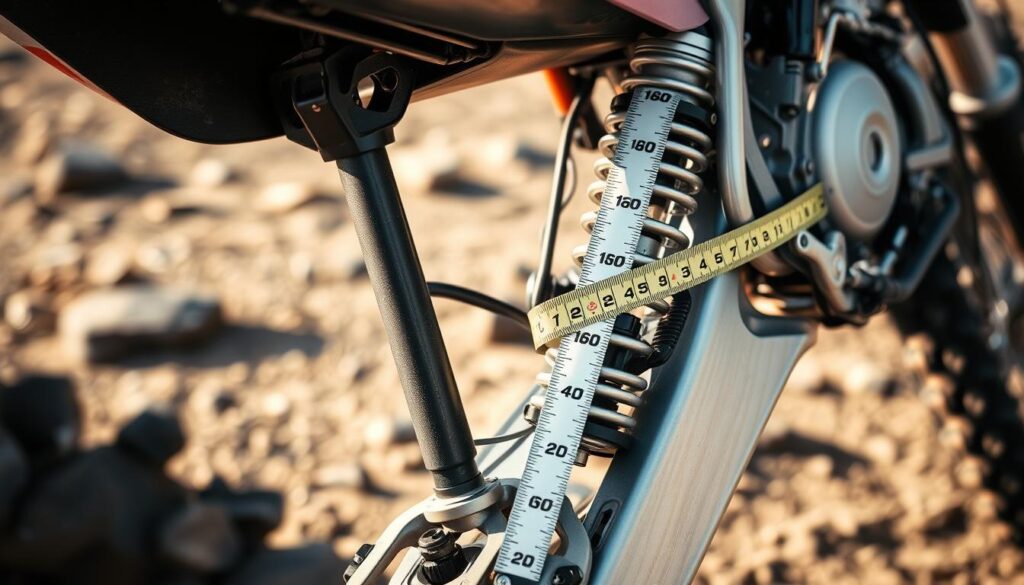
Rider sag is when the suspension compresses with you on the bike. Static sag is when the bike’s weight compresses it alone. For dirt bikes, rider sag should be between 100mm to 115mm. Static sag should be 25mm to 35mm.
Sag Setting Process
To set sag right, follow these steps:
- Measure the fully extended suspension
- Measure with you on the bike in riding position
- Find the difference to see the sag
- Adjust the spring preload to hit your target sag
For bikes from 125cc to 450cc, aim for 102-105mm of race sag. If sag is over 120mm, turn the spring clockwise to add more preload.
Importance of Proper Sag
Right sag is vital for balanced handling and top suspension performance. It impacts weight distribution, cornering stability, and ride comfort. If adjusting preload doesn’t get you the right sag, you might need to change spring rates.
| Bike Size | Recommended Race Sag |
|---|---|
| 125cc – 450cc | 102mm – 105mm |
| 85cc – 100cc | 80mm – 90mm |
| 50cc – 65cc | 70mm |
Remember, fine-tuning your suspension is a continuous process. Make small changes and test well to find the best setup for your riding style and terrain.
Compression Damping: Fine-Tuning Your Ride
Getting good at compression damping is key to making your motocross bike better. It’s about how your bike handles energy when it’s being squished. This affects how it does on different kinds of terrain.

Compression damping has two parts: low-speed and high-speed. Low-speed damping helps with smooth corners or dips. High-speed damping is for when you hit bumps, like roots or whoops.
Most bikes come with adjusters for low-speed damping. For high-speed, you might need something like Öhlins shocks. Always set your sag first before you start adjusting the damping.
Begin with the bike’s stock settings as a starting point. Change them a little at a time, like 1-2 clicks. This helps you find the right balance between feeling the ground and staying comfortable. Faster riders usually like stiffer settings, while slower ones prefer softer ones.
| Terrain Type | Recommended Adjustment |
|---|---|
| Soft Terrain | Softer compression settings |
| Hard Pack Dirt | Stiffer compression settings |
| Rocky Terrain | Increased high-speed compression |
Setting up your compression damping right keeps your bike from bottoming out. It also helps you control your bike on different terrains. By getting this right, you’ll make your rides better and more fun.
Rebound Damping: Balancing Recovery
Rebound damping is key for your Husqvarna motorcycle’s suspension. It controls how fast the suspension goes back up after it’s compressed. This affects how your bike handles and stays stable.
Defining Rebound Damping
Rebound damping controls how fast your suspension goes back to normal after hitting a bump. Finding the right balance is crucial for customizing your Husqvarna’s suspension.
Symptoms of Incorrect Rebound Settings
Too much rebound damping makes your bike feel stiff and hard to control. Not enough can cause it to wobble and bounce. Look out for these signs:
- Front end diving too much when you brake
- Rear shock kicking on bumps
- Loss of traction in corners
- Hard time keeping a straight line
Adjusting Rebound for Optimal Performance
To adjust rebound damping, start with the settings recommended by the manufacturer. Make small changes and test each one. You want the suspension to return quickly but not bounce.
For off-road riding, a bit slower rebound helps keep traction on different terrains.
“The ideal rebound setting lets your suspension recover as fast as possible without compromising stability or control.”
Remember, rebound damping works with compression damping. Adjusting one might need adjusting the other for the best performance on your Husqvarna.
Adapting Suspension for Different Terrains
Learning how to adjust your Husqvarna’s suspension for different terrains is crucial. You need to fine-tune it for sandy beaches, rocky trails, or smooth motocross tracks. This ensures your bike performs its best.
In sandy conditions, increase the sag to improve stability. Set the race sag to about 100mm for most Husabergs. Use harder springs or increase fork pressure to avoid bottoming out in deep sand.
For hardpack or intermediate terrains, aim for a balance between comfort and control. Adjust your rebound faster to keep traction and prevent harshness. A good rule is to use about one-third of available travel as sag.
It’s important to consider rider weight when adjusting suspension. Heavier riders might need stiffer springs, while lighter riders might prefer softer settings. Always check your spring rate. If the bike tops out or has less than 3/4 of an inch of sag, it’s time for an adjustment.
| Terrain Type | Fork Compression | Shock Compression | Rebound |
|---|---|---|---|
| Sand | Stiffer | Stiffer | Slower |
| Hardpack | Softer | Softer | Faster |
| Rocky | Medium | Stiffer | Medium |
Make small adjustments, one or two clicks at a time. Focus on either rebound or compression for the fork or shock. This careful approach will help you find the perfect setup for your riding style and terrain.
Sand Riding Suspension Techniques
Sand riding requires special dirt bike suspension adjustments. Your off-road suspension setup is key to mastering sandy terrain. Here are the techniques to boost your performance on the dunes.
Optimal Fork Settings for Sandy Conditions
When riding in sand, your fork setup needs extra care. Increase sag to 112-116mm for better stability. If you have air-sprung forks, add 5psi to the pressure. This stops you from bottoming out in deep sand.
Rear Shock Adjustments for Sand Tracks
Your rear suspension is also vital. Make the high-speed compression stiffer by 2 clicks and the low-speed by 4 clicks. This setup helps manage the mini G-outs you’ll hit as the track changes.
Tuning Throughout a Sand Race
As the race goes on, sand tracks change. Add 2 clicks of rebound damping to deal with deeper bumps. Remember, up to 80% of your sand riding prep is about suspension tweaks.
| Component | Adjustment | Reason |
|---|---|---|
| Sag | Increase to 112-116mm | Improved stability |
| Air-sprung forks | Increase pressure by 5psi | Prevent bottoming out |
| High-speed compression | Stiffen by 2 clicks | Manage G-outs |
| Low-speed compression | Stiffen by 4 clicks | Handle developing bumps |
| Rebound damping | Add 2 clicks | Compensate for deepening bumps |
With these sand-specific adjustments, you’ll control and speed better on sandy tracks. Remember, keep the throttle steady to stay on top of the sand and keep momentum.
Motocross vs. Enduro Suspension Setup
Husqvarna motocross and enduro bikes have different suspension setups. This is because they are made for different riding styles. The FC350 and FE350 models show how these differences affect their performance.
Motocross bikes, like the FC350, are lighter. They have smaller pipes, lower handlebars, and air forks. This makes them better for fast turns and big jumps. Enduro bikes, like the FE350, focus on comfort and versatility for long rides on different terrains.
Motocross and enduro bikes look different too. They have different seat heights, handlebar positions, and foot peg placements. These changes help riders feel more comfortable and in control.
The myHusqvarna app lets riders adjust engine settings on both motocross and enduro bikes. It helps with throttle response, traction control, and engine braking. This way, riders can make their bikes fit their style and the track they’re on.
| Feature | Motocross (FC350) | Enduro (FE350) |
|---|---|---|
| Weight | Lighter | Heavier |
| Suspension Focus | High-speed cornering, jumps | Versatility, long-distance comfort |
| Handlebar Height | Lower | Higher |
| Customization | myHusqvarna app | myHusqvarna app |
Good suspension setup is key for both motocross and enduro. It helps with traction, grip, and overall riding feel. With over 200 WP suspension Authorized Centers worldwide, riders can get expert help to make their Husqvarna bikes perform their best.
Advanced Suspension Modifications
Upgrading your Husqvarna’s suspension can really improve your ride. The right changes can make your bike’s suspension work better for you. Let’s look at some advanced ways to make your bike’s suspension better.
Upgrading to WP XACT Pro Components
WP XACT Pro parts are great for motocross riders. They make your ride more comfortable and precise. For enduro, WP XPLOR Pro is the best for different terrains.
Benefits of Aftermarket Suspension
Aftermarket parts can make your Husqvarna even better. The main benefits are:
- Separate high and low-speed compression damping circuits
- Easier preload adjustments
- Friction-optimized components
- Enhanced bottoming resistance
Professional Tuning Services
Professional tuning can make your bike truly yours. Experts can adjust settings for your weight, skill, and style. They’ll make sure your bike performs well in all conditions.
| Modification | Benefit |
|---|---|
| Vortex ignition system | 100% approval ratio |
| Swingarm pivot bolt adjustment | Enhanced rear-end traction |
| FMF muffler system | Improved performance on Rockstar Edition bikes |
The myHusqvarna app lets you customize engine and suspension settings on some models. It’s a great way to tweak your bike without needing a pro.
Common Suspension Setup Mistakes to Avoid
Husqvarna suspension setup can be tricky, even for experienced riders. Motorcycle suspension tuning requires patience and understanding. Let’s dive into common pitfalls and how to sidestep them for optimal performance.
One frequent error is adjusting multiple settings at once. This makes it hard to pinpoint which change improved or worsened your ride. Instead, make one adjustment at a time and test thoroughly.
Neglecting tire pressure is another oversight. Check it before every ride to reduce crash risks. Similarly, worn-out tires can lead to accidents, so regular maintenance is crucial.
Incorrect sag setup can cause discomfort and poor handling. Adjust it according to your weight for the best results. Remember, overly soft suspension can paradoxically feel too stiff as it bottoms out.
| Mistake | Consequence | Solution |
|---|---|---|
| Multiple adjustments at once | Confusion in identifying improvements | Change one setting at a time |
| Neglecting tire pressure | Increased crash risk | Check before every ride |
| Incorrect sag setup | Discomfort and poor handling | Adjust according to rider weight |
| Ignoring OEM settings | Loss of baseline reference | Record stock settings before adjusting |
Lastly, don’t forget to record your baseline settings before making changes. This gives you a reference point to return to if needed. With these tips in mind, you’ll avoid common pitfalls in your Husqvarna suspension setup journey.
Maintenance Tips for Husqvarna Suspension
Keeping your off-road ride smooth and responsive is crucial. By following simple routines, you can make your suspension last longer and work better.
Regular Inspection Routines
First, visually check your suspension parts. Look for oil leaks, worn seals, or damaged bushings. Clean your forks and shock after each ride to stop dirt buildup. Also, check your sag settings monthly, especially if you’ve added gear or changed your weight.
When to Service Your Suspension
Most riders should get their suspension serviced annually or every 100 hours of riding. But, if you’re riding hard, you might need more frequent checks. Watch for these signs:
- Unusual noises from the suspension
- Decreased performance or comfort
- Visible oil leaks
DIY Maintenance vs. Professional Servicing
Basic off-road suspension adjustments can be done at home. But, complex tasks are best left to the pros. You can do oil changes and basic cleaning yourself. But, revalving and internal repairs need special tools and knowledge.
| Maintenance Task | DIY or Professional | Frequency |
|---|---|---|
| Visual inspection | DIY | Before each ride |
| Sag adjustment | DIY | Monthly |
| Oil change | DIY/Professional | Annually or 100 hours |
| Seal replacement | Professional | As needed |
Regular maintenance of your Husqvarna suspension ensures your bike performs well. This way, you’re always ready for off-road adventures.
Rider Weight and Skill Level Considerations
Your weight and skill level are key when setting up your dirt bike. The average rider of a Husqvarna FC450 weighs about 180 pounds. If you’re heavier, you might need stiffer springs or more air pressure in your forks.
Riders over 195 pounds might find a 48N/m shock spring rate helpful. Your skill level also matters. More aggressive riders often prefer stiffer setups.
The myHusqvarna app can help you adjust your suspension. It considers your weight, skill level, and track conditions. It also helps set the right suspension sag for better bike handling. Aim for a shock sag of 104-105mm.
Proper suspension setup is vital for your bike’s handling and obstacle management. Start your fork setup with 10.9 bar air pressure and a compression setting of 14-15 out. Adjust one setting at a time to see its effect on performance.

