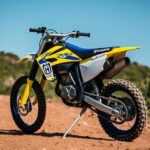

Did you know Husqvarna started as a firearms maker in 1689? This fact is a key part of their 325-year history. It shows how they’ve shaped the world of power tools and motorcycles.
Husqvarna has always been about innovation. They’ve made everything from vintage chainsaws to antique logging tools. Each item shows Swedish creativity and skill.
Husqvarna’s history is full of changes. In 1903, they made their first motorcycle. This move from guns to bikes shows their ability to adapt.
Looking at Husqvarna’s tools and bikes, you’ll see their big impact. They’ve won 82 world titles, including 15 FIM Motocross World Championships. This proves their strong presence in motorsports.
Husqvarna’s story is filled with amazing moments. From the Silverpilen in 1955 to the Norden 901 in 2023, they’ve always pushed the limits. Join this journey to see their incredible growth and lasting legacy.
Key Takeaways
- Husqvarna began as a firearms manufacturer in 1689
- The company produced its first motorcycle in 1903
- Husqvarna has won 82 world titles, including 15 FIM Motocross World Championships
- The brand has successfully transitioned across various industries
- Husqvarna continues to innovate with models like the electric EE 5 and the Norden 901
The Birth of Husqvarna: From Rifles to Motorcycles
Husqvarna’s journey from making rifles to motorcycles is a story of innovation and change. It started in 1903 in Huskvarna, Sweden. At first, it was a part of the Husqvarna armament firm. Then, it began making motorcycles, starting a new chapter for Husqvarna.
In 1916, Husqvarna made a big move by making motorcycles all by themselves. This move helped them grow fast. By 1939, they became Sweden’s biggest motorcycle maker, making a strong mark in the industry.
The 1930s were exciting for Husqvarna. They entered Grand Prix road racing, competing in the 350cc and 500cc classes. Racing improved their designs and boosted their fame. Now, many of these early bikes are valued Husqvarna museum pieces.
Husqvarna kept getting better over the years. In the 1960s and 1970s, they were off-road champions. They won 14 motocross world championships, 24 enduro world championships, and 11 Baja 1000 victories. These wins made Husqvarna a big name in motorcycles.
The company never stopped innovating. In 1983, they introduced a 500 cc bike that changed the game for four-stroke competition bikes. This drive for progress keeps Husqvarna leading in the motorcycle world.
Husqvarna’s First Motorcycle: The 1903 Model
In 1903, Husqvarna entered the world of motorized two-wheelers with its first motorcycle. This move marked the start of a long legacy. It influenced the development of antique Husqvarna equipment and shaped the brand’s future in motorcycles.
Design and Features
The 1903 Husqvarna motorcycle had a 98cc engine, a big deal back then. This model set the stage for future Husqvarna products. It showed the brand’s dedication to innovation and quality.
Impact on the Industry
Husqvarna’s motorcycle debut made waves in the industry. The 1903 model proved the company was a force to be reckoned with. By 1918, Husqvarna had the Model 150, a 550cc V-twin engine that produced 12 hp.
Historical Significance
The 1903 model is a treasure for Husqvarna collectors and motorcycle fans. It marked the beginning of Husqvarna’s journey in making motorcycles. This journey would lead to 82 World Championship titles in off-road racing.
This model also set the stage for Husqvarna’s success in motocross. The brand won the first four Motocross World Championship titles from 1960 to 1963.
| Year | Model | Engine Size | Power Output |
|---|---|---|---|
| 1903 | First Motorcycle | 98cc | Not Available |
| 1918 | Model 150 | 550cc V-twin | 12 hp |
The Interwar Period: Husqvarna’s Rise to Prominence
The interwar period was a key time for Husqvarna. The company grew its motorcycle range, making it a big name in Europe. It offered affordable, reliable bikes to meet the need for personal transport.
Models like the ‘Angel-Wing’ in 1939 became famous. These bikes are now highly valued by collectors. Husqvarna’s commitment to quality and innovation paved the way for its success.
Urban development played a big role in Husqvarna’s growth. Cities rebuilt after World War I included green spaces and roads. This helped the rise of personal transport, benefiting Husqvarna and other motorcycle makers.
| Factor | Impact on Husqvarna |
|---|---|
| Urban Green Areas | Increased demand for personal transport |
| Modernist Urban Planning | Improved road networks for motorcycles |
| Economic Recovery | Growing market for affordable vehicles |
Husqvarna’s success in this era set the stage for future innovations. The interwar years were vital in making Husqvarna a leading name in motorcycles. This laid the groundwork for its continued success and influence.
Post-War Innovation: The 1946 Husqvarna 98
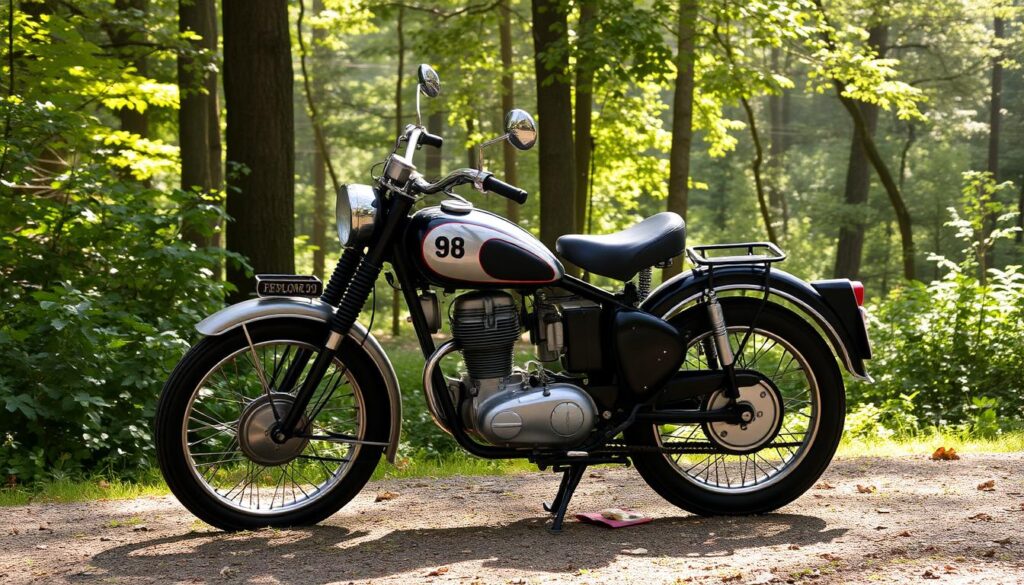
The 1946 Husqvarna 98, also known as the ‘Black-Mill’, was a game-changer. It was a symbol of innovation after World War II. It met the need for affordable ways to get around.
Technical Specifications
The ‘Black-Mill’ had features that were ahead of its time. It had a small 118cc engine that made 3 horsepower. It also had a three-speed gearbox and a kick-starter for easy starting.
| Feature | Specification |
|---|---|
| Engine | 118cc |
| Power Output | 3 horsepower |
| Transmission | 3-speed gearbox |
| Starting System | Kick-starter |
Market Reception
The 1946 Husqvarna 98 was priced at 960 Swedish kronor. This made it affordable for everyday use. Its practicality and price won over many, leading to huge success. Over 100,000 units were made between 1939 and 1959.
Legacy of the Model
The ‘Black-Mill’ made a lasting impact on Husqvarna. Its success led to the creation of other models like the ‘Red-Mill’ and ‘Blue-Mill’. The 1946 Husqvarna 98 is a beloved part of motorcycle history. It shows Husqvarna’s dedication to innovation and making things accessible.
“The 1946 Husqvarna 98 was more than just a motorcycle; it was a symbol of post-war recovery and the democratization of personal transport.”
The Golden Age of Husqvarna Motorcycles: 1960s and 1970s
The 1960s and 1970s were key years for Husqvarna motorcycles. During this time, classic Husqvarna bikes became famous among off-road fans. These bikes were known for their top-notch performance and new ideas.
From 1960 to 1963, Husqvarna won five FIM World Championship titles. This success made Husqvarna bikes popular all over the world. In 1966, Husqvarna riders won the International Six Days Trial in Sweden.
The 1960s also saw the creation of iconic Husqvarna models. Husqvarna made a special series of 250cc motocross bikes. These bikes were great for motocross and could also be used for enduro, showing Husqvarna’s flexibility.
- 1970: Husqvarna introduced its first all-enduro machine
- 1970s: Development of an innovative eight-speed gearbox
- US market: Bikes marketed as Commando (250cc) and Enduro (360cc)
Husqvarna’s golden age made it known for top-notch off-road bikes. The brand’s legacy from then still shapes today’s designs. This makes classic Husqvarna bikes very popular among collectors and fans.
Husqvarna Historical Models: A Timeline of Excellence
Husqvarna has been in the motorcycle game for over a century. It started in 1903 and has made many classic bikes since then. These bikes are now highly sought after by collectors.
The history of Husqvarna is filled with key moments. The SV model came out in 1924, raising the bar for bikes. Then, in 1946, the Model 24 ‘Black-Mill’ showed big improvements in motorcycle tech after World War II.
In the 1950s, Husqvarna kept making its 118cc model better. Each new version showed off the brand’s focus on quality and performance. These bikes were more than just vehicles; they were symbols of Husqvarna’s dedication to excellence.
| Year | Model | Significance |
|---|---|---|
| 1903 | First Motorcycle | Entry into motorcycle industry |
| 1924 | SV | Set new performance standards |
| 1946 | Model 24 ‘Black-Mill’ | Post-war technological leap |
| 1950s | 118cc Iterations | Continuous refinement and innovation |
Husqvarna’s drive to innovate led to their success in motocross in the 1960s and 1970s. This period made Husqvarna famous for its high-performance bikes. It won a huge following worldwide that still grows today.
The Iconic Husqvarna 400 Cross: Steve McQueen’s Choice
The Husqvarna 400 Cross is a key part of Husqvarna’s motorsports legacy. It was a top performer on dirt tracks and won Steve McQueen’s heart. Husqvarna started with forestry equipment but made legendary motorcycles.
Design and Performance
The 400 Cross had advanced features for its era. Its strong two-stroke engine and top-notch suspension made it unbeatable. Husqvarna’s skill in making classic bikes is clear in this model.
Cultural Impact
Steve McQueen’s love for the 400 Cross made Husqvarna famous. He owned five, including the “Beach Bike” in “On Any Sunday.” This film, backed by McQueen, broke records and made the 400 Cross a legend.
Collector’s Value Today
Today, the 400 Cross is highly valued by collectors. McQueen’s bike, the Husqvarna MH1341, was restored in 2008. It’s now at the San Diego Auto Museum. Restoring these bikes is a detailed task, needing rare parts and special care.
Husqvarna’s journey from forestry to motocross shows their engineering prowess. The 400 Cross is a lasting symbol of Husqvarna’s impact on motorcycle history.
Evolution of Husqvarna’s Two-Stroke Engines
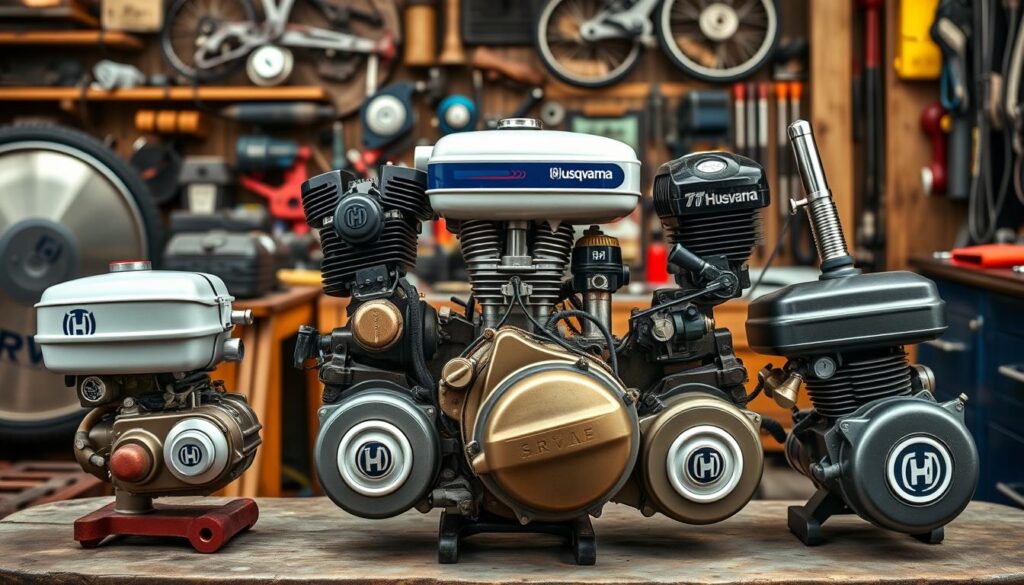
Husqvarna started working on two-stroke engines over a century ago. Their first motorized bicycle was in 1903. This was the start of a legacy that has shaped Husqvarna today.
Over time, Husqvarna’s two-stroke engines got more powerful and efficient. In 1930, they had models with different power levels:
- 175cc model: 5.5 hp
- 250cc model: 7.5 hp
- 550cc model: 14 hp
By the early 1930s, Husqvarna introduced overhead valve singles. This pushed the limits of what was possible:
- 250cc No. 30-A: 11 hp
- 500cc No. 50 “Turistmodel”: 20 hp
- 500cc “Specialracer Motorcykel”: 33 hp
In the 1950s, Husqvarna introduced the Silverpilen. It was a lightweight off-road motorcycle, weighing just 75 kg. It became very popular among Husqvarna fans.
Husqvarna kept innovating into the 21st century. In 2017, they launched a new range of Enduro motorcycles. These bikes had a 2-stroke fuel injection system and met Euro 4 emissions standards. This showed Husqvarna’s ability to mix old-school charm with new tech.
| Year | Model | Power Output |
|---|---|---|
| 1930 | 550cc | 14 hp |
| 1932 | 350cc OHV | 14 hp |
| 1933 | 990cc V-twin “Modell 120” | 26 hp at 3,500 rpm |
Today, Husqvarna offers a variety of two-stroke motorcycles. They range from Motocross racing bikes to the EE 5 electric motorbike. This shows their ongoing commitment to innovation in the motorcycle world.
Husqvarna’s Foray into Four-Stroke Technology
The Husqvarna nostalgia series made a big change when they started using four-stroke technology. This move changed their lineup and made them a key part of motorcycle history.
Early Four-Stroke Models
In the early 1980s, Husqvarna began using four-stroke engines. These bikes were different from their old two-stroke models. They had new designs that made them stand out.
Technological Advancements
Husqvarna’s four-stroke engines had the latest technology. They included:
- DOHC (Double Overhead Camshaft) systems
- Electronic fuel injection
- Lightweight materials for better power-to-weight ratios
Impact on Racing Performance
The switch to four-stroke engines greatly improved Husqvarna’s racing. In recent races, Husqvarna riders have done very well:
| Rider | Class | Result |
|---|---|---|
| Malcolm Stewart | 450SMX | 17th overall |
| Christian Craig | 450SMX | 20th overall |
| Landon Gibson | 250 World All-Stars | 7th in Main Event |
These results show how Husqvarna’s bikes are still top-notch. Their focus on four-stroke technology keeps them leading in motorcycle racing.
The Swedish Connection: Husqvarna’s Heritage and Design Philosophy
Husqvarna has deep roots in Sweden, starting in 1689. It first made weapons for the Swedish king. This history guides the brand’s design, mixing function with durability. You see this in their bikes and in their vintage chainsaws and forestry machines.
The company moved from making rifles to motorcycles in 1903. By 1916, they won their first motorcycle race. This victory was the start of many more wins.
Husqvarna’s racing history shows their commitment to performance. They’ve won 78 world titles in Cross, Enduro, and Supermotard. Their Swedish design focuses on reliability and efficiency, even in tough conditions.
Husqvarna’s heritage also shows in their antique logging tools. These were made to last in the Nordic forests. They share the same strong and functional design as their motorcycles.
| Year | Milestone |
|---|---|
| 1689 | Husqvarna founded in Sweden |
| 1903 | First Husqvarna motorcycle produced |
| 1916 | First motorcycle race victory |
| 1955 | Introduction of Silver Arrow model |
| 2010 | Latest world title win |
Today, Husqvarna still values its Swedish roots. They have 260 employees at their Cassinetta di Biandronno site. The company keeps growing, mixing its history with new technology in bikes and forestry gear.
Husqvarna in Motocross: Dominating the Dirt
Husqvarna’s legacy in motocross is as impressive as its retro wood-cutting tools. The brand’s dominance started in the 1960s. It carved a path through the dirt, just like their legendary lumberjack gear cut through forests. Since 1960, Husqvarna has won 15 FIM Motocross World Championship titles. This has cemented its place among the heritage sawmill relics of motorsport history.
The Husqvarna 125CR model, produced from 1972 to 1985, showed the brand’s commitment to innovation. This bike, along with others like the 250 Cross, helped Husqvarna build its reputation. The 1974 250 CR MAG model, considered the best Husqvarna ever built, featured magnesium components for better performance.
Future World Champions Torsten Hallman and Rolf Tibblin started their careers on modified Silverpilens, Husqvarna’s 175cc bikes. The 1966 Husqvarna 360 Viking, based on Hallman’s 250 World Championships, was a game-changer. It had 37 horsepower and weighed only 215 pounds.
“The 1968 Husqvarna Cross models were crucial in shaping the brand’s off-road offerings.”
Husqvarna’s success in motocross led to the development of specialized models. These bikes had cutting-edge technology and design features for competitive off-road racing. The move from 4-speed to 5-speed transmission in the 1972 250cc Cross model shows Husqvarna’s commitment to improvement.
Today, Husqvarna continues to dominate the dirt, blending its rich heritage with modern technology. Just as their retro wood-cutting tools and legendary lumberjack gear left a mark on history, Husqvarna’s motocross bikes continue to shape the future of off-road racing.
Vintage Husqvarna Motorcycles: Collector’s Guide
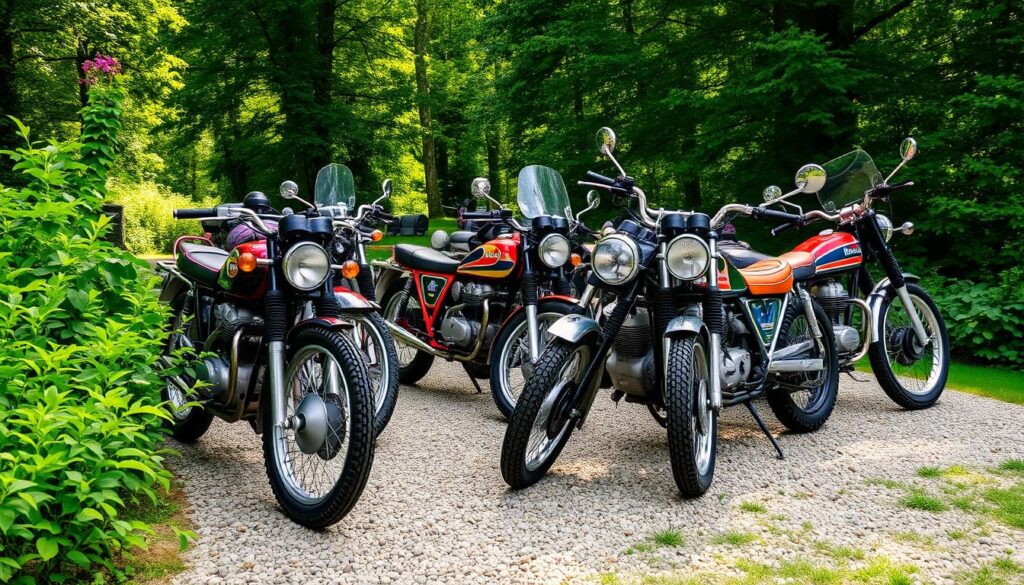
Vintage Husqvarna motorcycles are highly valued by collectors. They combine Swedish engineering with off-road prowess. Husqvarna is famous for its timber harvesting tools, but its motorcycles are just as notable.
Identifying Rare Models
Early production years hold the rarest Husqvarna models. The 1963 Husqvarna 250 Works Motocross is a rare find, with only 100 made. The 1966 250 Works Motocross is also rare, with only 300 made and 76 in the USA.
Restoration Tips
Restoring vintage Husqvarnas needs careful attention. Use original paint for authenticity. The Husky Club newsletters are full of helpful tips and specs.
For example, the third newsletter talks about Motoplat testing and maintenance. This is key for keeping classic Husqvarna logging equipment in top shape.
Market Value and Trends
The vintage Husqvarna market is still strong. The 1969 Husqvarna 400 Cross Vic Eastwood Replica is highly sought after. Its rarity and historical value drive up its price.
Collectors look for bikes with matching numbers. The 1965-1967 250T Commando is a prime example. Its matching frame and engine numbers make it highly desirable.
| Year | Model | Engine Number | Frame Number |
|---|---|---|---|
| 1965-1967 | 250T Commando | Matches frame number | Matches engine number |
| 1971 | 250 | MI-0001 onwards | 253xxx to 26xxxx |
| 1974-1975 | 175 | ML-00001 onwards | MK-00001 onwards |
When collecting vintage Husqvarna tools or motorcycles, focus on authenticity and condition. Verify numbers and seek expert advice before investing.
From Acquisition to Innovation: Husqvarna Under BMW and KTM
In 2007, BMW bought Husqvarna. This change brought new ideas to the company famous for its antique motorcycles and classic lawnmowers. It mixed German engineering with Swedish heritage.
In 2013, KTM took over from BMW. This move started a new chapter of innovation for Husqvarna. KTM’s off-road expertise matched Husqvarna’s history, creating a strong partnership.
Under KTM, Husqvarna introduced new tech while keeping its design unique. Models now have better suspension, strong engines, and advanced electronics. These updates have made the brand appealing to both new fans and collectors.
KTM and Husqvarna share parts, cutting costs and improving efficiency. This strategy lets Husqvarna focus on innovation while staying true to its identity.
Husqvarna’s Legacy in Enduro and Off-Road Racing
Husqvarna’s journey in enduro and off-road racing is filled with triumph and innovation. Since the 1960s, its products have ruled dirt tracks around the world. The brand’s success in these areas has shaped its production models, adding race-derived technologies to consumer motorcycles.
The FC 450, with its 450 cc single-cylinder engine, still excels in motocross. The TE 300i Rockstar Edition, with a 300 cc two-stroke engine and Transfer Port Injection, shows Husqvarna’s dedication to off-road racing tech.
Nostalgic Husqvarna equipment still wins hearts. Riders like Graham Jarvis have won big in extreme enduro, following in the footsteps of legends like Torsten Hallman and Steve McQueen. Today, Husqvarna is active in local motorsport and sponsors events in South Africa, connecting with the riding community and boosting its brand.
Exploring Husqvarna’s racing heritage shows its ongoing commitment to excellence. From its early days to now, Husqvarna remains a key player in off-road racing. It inspires riders and pushes the limits of motorcycle performance.